

HAIR RESTORATION · LONDON
Beard Transplant
Fill patchy growth, define the jawline or build a full beard using your own follicles, placed at the acute angles facial hair demands.
Last clinically reviewed: August 2026
A beard transplant fills patchy growth, sharpens the jawline and builds density using follicles taken from the back of your scalp.
Patchy beard growth is genetic for most men, and no topical product reliably changes it. Transplanting scalp follicles into the beard area works because relocated hair keeps growing, and beard-area hair grows longer and coarser over time as it adapts.
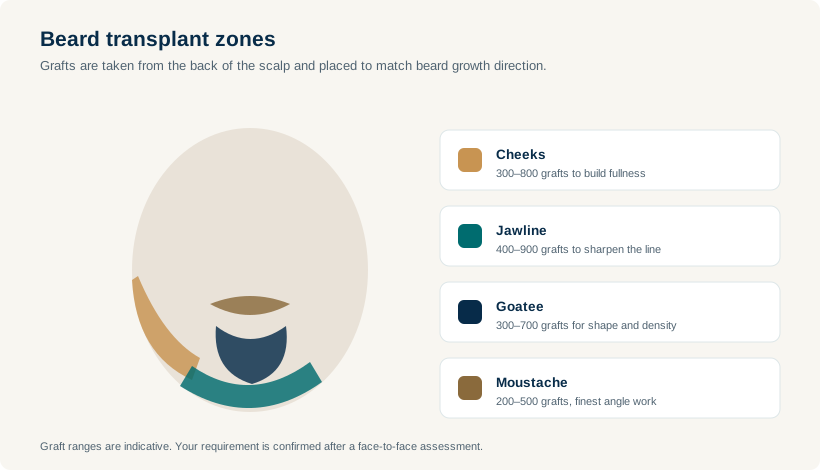
Areas we treat
| Zone | Typical grafts | Notes |
|---|---|---|
| Cheeks | 300–800 | Filling patchy or sparse cheek growth |
| Jawline | 400–900 | Sharpening and defining the mandibular line |
| Goatee | 300–700 | Chin and surrounding shape |
| Moustache | 200–500 | Finest angle work, most technically demanding |
| Full beard | 1,500–3,000 | Complete reconstruction across all zones |
How beard transplants differ from scalp work
- Beard hair grows at a very acute angle, close to flat against the skin
- Facial skin is softer and more mobile than scalp, requiring different placement technique
- Mostly single-hair grafts are used, since facial hair naturally emerges singly
- Direction varies significantly across the face and must be mapped zone by zone
- Swelling in the first few days is more noticeable than with scalp procedures
DHI implanter pens are frequently used for beard work because of the angle control they provide.
Recovery and growth
- Days 1–5Small crusts form around each graft. Facial swelling is common and settles quickly.
- Days 6–10Crusts lift. Most men are comfortable in public by the end of week two.
- Weeks 3–6Transplanted hairs shed, as with scalp procedures. This is expected.
- Months 3–6New growth begins and gradually coarsens.
- Months 9–12Final density and texture. You can shave normally throughout from around week four.
 Clinically reviewed by Dr. Ducu Botoaca
Aesthetic & Hair Transplant Surgeon and founder of The Men Clinics, Soho, London. This page is general information and is not a substitute for a personal medical assessment.
Clinically reviewed by Dr. Ducu Botoaca
Aesthetic & Hair Transplant Surgeon and founder of The Men Clinics, Soho, London. This page is general information and is not a substitute for a personal medical assessment.
Frequently asked questions
Where does beard hair come from?
Almost always from the back of your scalp, in the same permanent donor zone used for hair transplants. Scalp hair adapts well to the beard area, gradually taking on a coarser texture over the first year.
Can I shave normally afterwards?
Yes, from around four weeks. Before that the grafts need to settle undisturbed. Once established the hair grows continuously and needs trimming like the rest of your beard.
Will it match my existing beard?
Colour and texture are matched as closely as possible, and transplanted hair coarsens over time in the facial environment. A slight difference in texture can persist, which is why grafts are blended into existing growth rather than placed in isolated blocks.
How many grafts do I need for a full beard?
Full reconstruction typically needs 1,500 to 3,000 grafts. Targeted work on patchy cheeks or a weak jawline often needs far fewer, in the region of 400 to 900 per zone.
Is the swelling bad?
Facial swelling is more noticeable than after a scalp transplant and usually peaks on day two or three. It settles within a week. Sleeping propped up in the first few nights helps considerably.
EXPLORE MORE
Other treatments
Ready to talk to a specialist?
Book a free, no-obligation consultation at our Soho clinic. You will get an examination, an honest assessment and a written plan with no deposit requested on the day.
The information on this page is general guidance and is not medical advice. It does not replace a personal consultation with a qualified clinician. Individual results vary. The Men Clinics, Soho, London.